Transparency and independence
Working in part with the company yet needing to remain at arms-length is part of the CCG process. It is particularly important that we remain independent and ward against company ‘capture’.
Independence and accountability
The Group has taken/is taking a number of steps to ensure and strengthen our own independence and accountability:
These include but are not limited to:
- Recruiting an independent Chair via open competitive recruitment with a CCW involved in the interview process.
- Requiring all members to act independently as part of a Members Code of Conduct.
- Setting and controlling our own agenda in liaison with South East Water.
- Holding private sessions when company representatives are not present – every meeting has a private session and in addition we hold full private sessions when assessing the company’s performance.
- The Group maintain an up to date Terms of Reference agreed with the company.
- Having a Declaration of Interests Policy , a set part of the agenda to declare any conflicts and a Register of Interests.
- Publishing the costs of the CCG.
- We developed this independent website separate from South East Water’s.
- Keeping a Recommendations Log and a Challenge Log .
- Reviewing CCG member recruitment processes and members’ tenure to ensure the right balance between continuity of expertise and fresh independent perspectives. This includes ensuring a maximum tenure of members of two price controls (unless they are a statutory member). Membership was last refreshed in 2020 and we are in the process of appointing new members now.
- The introduction of an independence statement at the beginning of each meeting to remind expert members that they are not attending the meeting either representing their own interests or as representatives of the organisations they work for or with in their role on the CCG.
- Seek to hear views from a wide variety of South East Water employees at all levels.
- There is a formal requirement in the Code of Conduct for members to raise if they have a concern about a colleagues independence.
Going forward we have a particular focus on ensuring a wider range of voices are heard by the CCG e.g. external presentations to the Group, and hope to build closer relationships with regulators and external stakeholders that can provide ongoing independent views and information on company performance.
The processes we adopt are in our Terms of References.
Improving CCG efficiency and effectiveness
Following the submission of the Group’s independent assurance report to Ofwat in 2018 the CCG reviewed its effectiveness and carried out a range of lessons learned activity. This included a desk-based review of other CCGs’ activity and approaches in other sectors; an independent survey of CCG members and South East Water staff to understand where they believed improvements could be made, carried out by Creative Sensemaking; reviewed the findings of a cross-CCG Chairs survey; and held a workshop facilitated by the latter to discuss findings and recommendations. This was translated into a Challenge Group Improvement Action Plan by a dedicated working group, which was approved by the whole CCG and South East Water and was implemented 2019-2021.

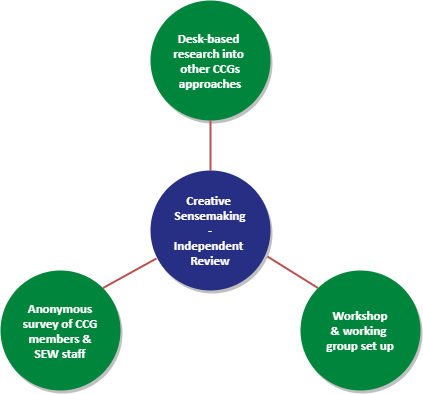
We made a number of changes in 2019/20 as part of our Improvement Action Plan:
- Introduced a 15 minute slot at the end of all main CCG meetings where both South East Water and CCG members give views on what we think went well/could be improved from the meeting and this is applied to our work going forward. We also score the meeting out of ten to provide a consistent ‘touch point’ (though in practice expectations rise as improvements are made).
- Worked hard with South East Water to improve the quality of papers and materials shared with the CCG and strategic framing so as to maximise our effectiveness. This includes new cover sheets clearly explaining role papers and areas of challenge/feedback sought.
- Moved away from 'show and tell' presentations to select committee style Q&As - SEW staff attending tend to make short introductory remarks before answering points of clarification and themed questions.
- The CCG now pre-specifies areas of interest for each topic under consideration in advance of the main CCG meeting, with papers shared 14 days in advance. Initial questions are raised by members in advance and themed by the topic lead. On the day key questions are asked with unseen supplementaries. This has been a very positive change to working methodology.
- We also took steps to strengthen our audit trail and information management. This included setting up a shared workspace for the CCG (on Huddle); improvements to the Challenge Log, creation of a separate Action Log; written feedback to the company following CCG meetings, and separate pre-meeting question sheets. More recently the setting up of a Feedback Log.
- We also developed CCG effectiveness criteria in 2019 and review regularly against this, frequency dependent on the number of meetings. This criteria was based on a model developed by KPMG for Northern Gas Grid’s Customer Engagement Group. Our thanks to NGN’s Customer Engagement Group Chair for sharing this.
- We are also exploring how we can best assess, capture and communicate impact.